Activated Charcoal Teeth Whitening: What the Evidence Really Says
If you spend any time on social media, you have likely seen videos of people brushing with black charcoal powder and revealing bright white teeth seconds later. Activated charcoal teeth whitening has become one of the most searched dental trends in recent years. Many patients in Gurugram and Malviya Nagar ask us whether it actually works, or whether it is doing more harm than good. Here is an honest, evidence-based answer.
What Is Activated Charcoal, and Why Do People Use It on Teeth
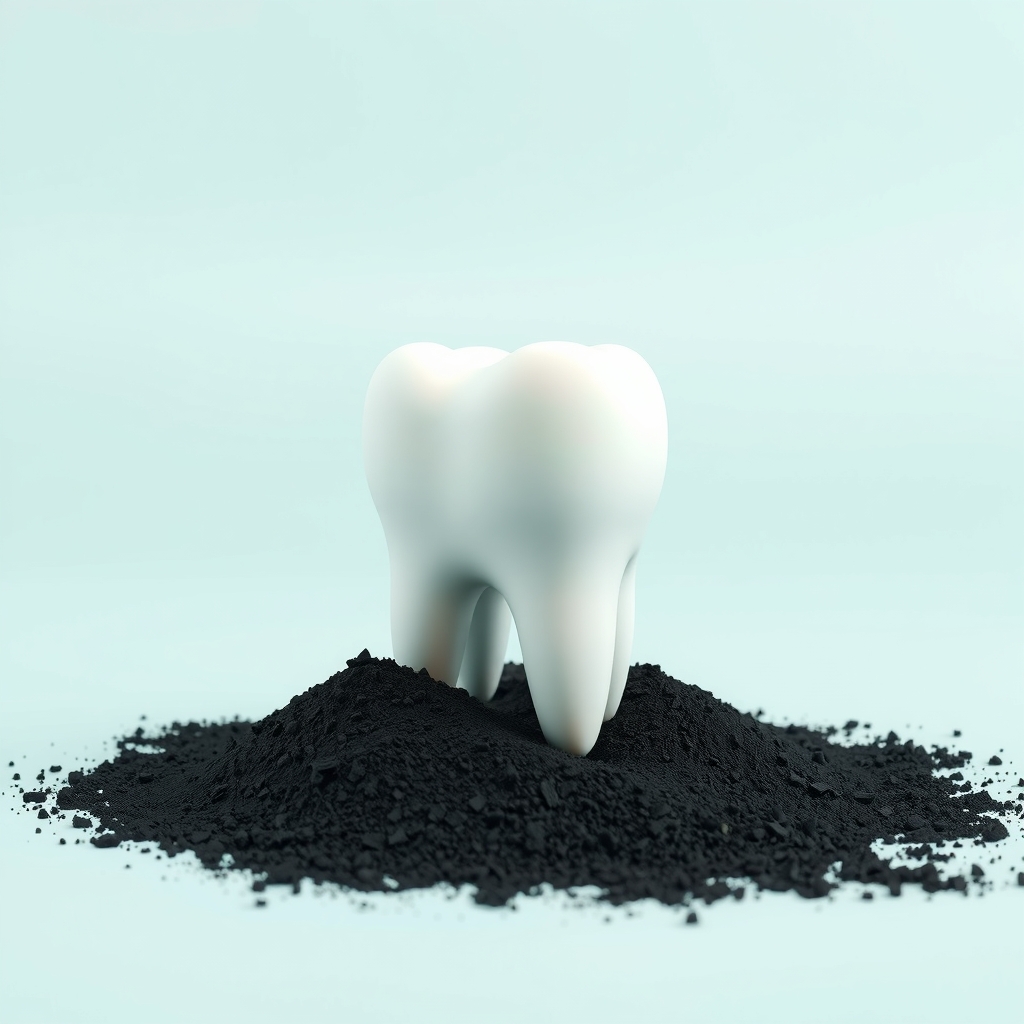
Activated charcoal is a fine black powder made from substances like coconut shells or wood, processed at high temperatures to make it extremely porous. It is well known in medicine for absorbing toxins in cases of poisoning. That absorbent property is the main reason it was adapted into toothpaste and powders marketed for whitening.
The theory is that charcoal binds to surface stains on teeth and lifts them away when you brush. In practice, the results are more about physical scrubbing than any chemical whitening action.
What the Research Actually Shows
Several dental research reviews have looked closely at charcoal-based whitening products, and the findings are fairly consistent:
- There is currently no strong clinical evidence that charcoal toothpaste whitens teeth better than regular fluoride toothpaste.
- Most charcoal products are abrasive, meaning they work mainly by scraping away surface stain rather than changing tooth colour.
- Many charcoal toothpastes do not contain fluoride, which is essential for cavity prevention.
- Long-term safety data is limited, since most charcoal dental products are relatively new to the market.
In short, any brightening effect people notice is usually temporary and comes from removing superficial stains, not from an actual whitening reaction like professional treatments use.
Common Myths Worth Debunking
- Myth: Charcoal removes deep stains. It cannot reach stains inside the tooth structure, called intrinsic stains, which come from ageing, certain medications, or injury.
- Myth: It is natural, so it is safe. Natural does not always mean gentle. Its abrasiveness can still damage enamel with repeated use.
- Myth: It strengthens teeth. Charcoal has no proven role in remineralising or strengthening enamel.
The Real Risks of Charcoal Whitening
Beyond simply not delivering the whitening results people hope for, charcoal powders and toothpastes carry a few genuine concerns:
- Enamel wear: Enamel does not regenerate once lost. Abrasive scrubbing, especially with a hard-bristled brush, can thin it over months of regular use.
- Increased sensitivity: As enamel wears down, the underlying dentin can become exposed, leading to sensitivity to hot, cold, or sweet foods.
- Gum irritation: The gritty texture can be rough on gum tissue, particularly along the gumline.
- Staining in grooves and crowns: Charcoal particles can settle into tooth grooves, old fillings, or dental crowns, sometimes making them look darker rather than lighter.
- Missed fluoride protection: If it replaces your regular fluoride toothpaste, you may be missing out on proven cavity protection.
Safer, Evidence-Based Alternatives
If your goal is a brighter smile, there are proven options that dentists use and recommend, each suited to different needs.
In-Chair Professional Whitening
This uses a controlled, dentist-supervised bleaching gel, often with light activation, to lighten teeth in a single visit. It is monitored closely to protect gums and manage sensitivity.
Take-Home Whitening Kits From Your Dentist
Custom-fitted trays with a professional-grade gel let you whiten gradually at home under your dentist's guidance, which tends to be gentler on sensitive teeth.
Professional Cleaning for Surface Stains
If your discolouration is mainly from tea, coffee, or tobacco staining, a simple professional cleaning and polishing may restore much of your natural shade without any bleaching at all.
| Option | Typical Range (INR) | Best For |
|---|---|---|
| Professional cleaning and polishing | Rs 1,500 to Rs 4,000 | Surface stains from food, tea, coffee |
| Take-home whitening kit | Rs 5,000 to Rs 12,000 | Gradual, supervised whitening |
| In-chair whitening | Rs 8,000 to Rs 20,000 | Faster, visible results |
These are only typical ranges seen in Gurugram and Malviya Nagar, Delhi, and your dentist can give you an accurate estimate after examining your teeth.
Our Recommendation
Activated charcoal may feel satisfying to use, but the current evidence does not support it as a safe or effective long-term whitening solution. If you are curious about brightening your smile, a consultation at Esthetica International Clinique can help identify the actual cause of discolouration and the safest path forward, whether that is a simple cleaning or a supervised whitening plan suited to your teeth.
Have questions about your teeth?
Esthetica International Clinique · 95P, Sector 47, Gurugram
Frequently asked questions
Can activated charcoal make teeth whiter permanently?
No. It may remove some surface stain temporarily through abrasion, but it does not change the natural colour of your teeth and has no bleaching action.
Is it safe to use activated charcoal toothpaste daily?
Daily use is not recommended. The abrasiveness can wear down enamel over time, especially when used more than a few times a week.
How much does professional whitening cost in Gurugram?
In-chair whitening typically ranges from about Rs 8,000 to Rs 20,000, and take-home kits from dentists typically range from Rs 5,000 to Rs 12,000, depending on the case.
Is charcoal good for people with sensitive teeth?
Generally no. Its abrasive nature can worsen sensitivity, especially if enamel is already thin or gums have receded.
Treatment costs mentioned on this page are indicative ranges for the Gurugram & Malviya Nagar, Delhi region. Your exact cost depends on your case and will be confirmed after a clinical examination at the clinic.